
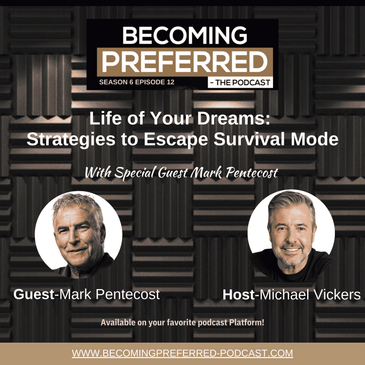
SEASON: 6 EPISODE: 12
Episode Overview:
Welcome back to Becoming Preferred, the podcast where we talk to the leaders and visionaries who refuse to settle for 'good enough.' Today, we’re tackling a psychological trap that captures thousands of high-performing professionals every single year. It’s called 'The Dependence Dilemma'. That invisible ceiling of financial obligations and the false sense of security that keeps brilliant people stuck in survival mode.
Our guest today is a man who didn't just break that ceiling; he shattered it. He started in the classroom as a high school math teacher, crunching numbers just to make ends meet. But he decided to stop playing it safe and started playing it big.
That shift led him to found a direct sales empire that has cleared over a billion dollars in global sales. He is a world-renowned philanthropist, a cancer survivor who turned his battle into a multi-million-dollar research mission, and the author of the transformative new book, Life of Your Dreams.
He’s here to show us that the gap between where you are and where you want to be isn't a matter of luck—it’s a matter of mindset and seven specific, transformative steps. Join me for my conversation with Mark Pentecost.
Guest Bio:
Mark Pentecost went from being a high school teacher to becoming a billionaire, a nationally-recognized philanthropist, and a world-renowned thought leader.
From founding a direct sales company that has surpassed over a billion dollars in sales globally, to surviving cancer (and donating millions of dollars toward cancer research along the way), Mark knows just how precious life is and has dedicated his own life to helping other people achieve their dreams.
Resource Links:
- Website: https://pentecostgroup.com/our-story/
- Product Link: https://pentecostgroup.com/life-of-your-dreams-book/
Insight Gold Timestamps:
01:50 In your new book, Life of Your Dreams
03:04 I was one of those guys always reading a book
05:29 He said, if you don't do something different, in 20 years, you're going to be doing the same thing with the same issues
08:19 My daughter had come and said, D ad, we've got to tell your story
11:18 I didn't know I was an entrepreneur until later in life
12:55 If you're not happy then nobody around you is happy
16:41 He (my grandpa) would say, Mark, you can't force a horse to drink, but you can salt the oats
17:11 I have a whole chapter on Say It and See it
19:22 Being a CEO was like a head coach
21:01 I decided to live on the offence, and that changed everything
23:33 I would start naming our issues
25:00 I realized sometimes my greatest strength was my greatest weakness
27:39 Do you have a rudder on your ship or is the wind just blowing you wherever you go?
29:37 My point today is if you really want something, there's ways to do it
29:55 in the book, I call it Grit-Q. What is, I don't care about your IQ, what's your Grit-Q?
30:58 I think dreaming is like a muscle, the more you dream, the bigger it gets
33:17 Life's full of pivots
34:50 I always say the dream you're most proud, is the one you're afraid to say out loud
36:12 You know, the scariest day and the best day of my life was the day I resigned and walked out
38:41 But when's enough, enough?
42:22 You've got this, but you've got to get in the game
43:51 The book is called Life of Your Dreams
44:05 The website pentecostgroup.com
44:21 We started Impact Professionals which is like Netflix for entrepreneurs
Connect Socially:
LinkedIn: https://www.linkedin.com/in/markbpentecost/
Facebook: https://www.facebook.com/mark.pentecost.14
Instagram: https://www.instagram.com/themarkpentecost/?hl=en
Email: pent@pentecostgroup.com
Sponsors:
Rainmaker LeadGen Platform Demo: https://calendar.summit-learning.com/widget/booking/JKItVP7WErmCBjU2cCIx
Rainmaker Digital Solutions: https://www.rainmakerdigitalsolutions.com/
In 3, 2, 1.
Speaker BWelcome back to Becoming Preferred, the podcast where we talk to the leaders and visionaries who refuse to settle for good enough.
Speaker BToday we are tackling a psychological trap that captures thousands of high performing professionals every single year.
Speaker BIt's called the dependence dilemma, that invisible ceiling of financial obligations and the false sense of security that keeps brilliant people stuck in survival mode.
Speaker BOur guest today is a man who didn't just break that ceiling, he shattered it.
Speaker BHe started in the classroom as a high school math teacher crunching numbers just.
Speaker CTo make ends meet.
Speaker BBut he decided to stop playing it safe and started playing it big.
Speaker BThat shift led him to found a direct sales empire that has cleared over a billion dollars in global sales.
Speaker BHe is a world renowned philanthropist, a cancer survivor who turned his battle into into a multimillion dollar research mission, and the author of the transformative new book, Life of youf Dreams.
Speaker BHe's here to show us that the.
Speaker CGap between where you are and where.
Speaker BYou want to be isn't a matter of luck.
Speaker BIt's a matter of mindset and seven specific transformative steps.
Speaker BJoin me now for my conversation with Mark Pentecost.
Speaker CWell, hi Mark.
Speaker CWelcome to the program.
Speaker BWe're delighted to have you.
Speaker AGreat to meet you and thanks.
Speaker AI'd have some conversation.
Speaker AI like your humor.
Speaker AI like when I can have fun today.
Speaker AAnd I think we're going to have fun.
Speaker CI think we are going to have fun.
Speaker CI'm really excited about this one.
Speaker CI love talking to entrepreneurs.
Speaker CAnd as an entrepreneur and my whole life I'm always looking at, hey, how did people do that?
Speaker CAnd I love people who take the risks, who are bold, go out there and go out of the comfort zones because I know what that feels like.
Speaker CAnd it's something we always have to wrestle with.
Speaker CAnd I want to kind of unpack that because in your new book, Life of youf Dreams, how to Take youe Family, Fun and Financial Freedom to A Whole New what do you call another level?
Speaker CThat's right, level that up.
Speaker CWe want to share some of those insights with the audience, are interested in their entrepreneurs.
Speaker CThey're business people, CEOs, executives.
Speaker CSo it's our kind of audience.
Speaker CAnd I know as a professional speaker, I always enjoy talking to other professional speakers.
Speaker CSo we got lots to talk about.
Speaker CSo.
Speaker CBut before we get into it, let's talk about how did Mark become Mark?
Speaker CSo you're back in high school.
Speaker CI think you're living in Michigan at the time.
Speaker CWhat are you figuring out?
Speaker CWhat do you want to be when you grow up?
Speaker AInteresting.
Speaker AWriting the book really kind of made me reflect on that a little bit, because my family was from Tennessee.
Speaker AThey were farmers.
Speaker AFarms were playing out, so they moved to Michigan to get jobs at the factory.
Speaker AAnd nobody had gone to college.
Speaker AAnd so I was the first one go to college.
Speaker AI thought I'd be a teacher, love sports.
Speaker AI wanted to be a basketball coach.
Speaker AAnd so I did that for 16 years.
Speaker AI went.
Speaker ATook me about three to get to the top spot.
Speaker AI was the varsity coach, having a good life.
Speaker ABut there was something stirring in here that there was more I wanted to do, and I was impacting the young people there.
Speaker AI was teaching and coaching.
Speaker AI had three kids.
Speaker AWe're raising our family, but I was one of those guys always reading a book or always.
Speaker AThere was an old Tom Cruise movie back then called Cocktails, and he always had a book under the bar on how to get ahead at something.
Speaker AThat was me as a teacher.
Speaker AI always had a book on how to make money in real estate, how to use direct sales, how to get ahead in life.
Speaker AAnd, you know, there's just some stirring all the time.
Speaker CWell, it's that curiosity.
Speaker CI.
Speaker CThis is what I loved about your story, is I can relate completely.
Speaker C18, 17, 18, I started reading.
Speaker CAnd back then, that was the tools we had.
Speaker CIt was just books, and we didn't even have audio books.
Speaker CThat wasn't a thing.
Speaker CYou had record players, and that was it.
Speaker CTry and tell that to young people.
Speaker CSo they go, what is that?
Speaker CBut it was.
Speaker CBut we didn't have YouTube.
Speaker CAnd if you had any kind of condition, if you were dyslexic, if you were on the spectrum anywhere, if you were neurodivergent, you couldn't learn, you were stuck.
Speaker CAnd now all these modalities have come into the marketplace where we have no excuse not to learn.
Speaker CSo I definitely want to unpack part of that.
Speaker CAll right, so you're going through.
Speaker CYou're looking at it, you're reading books.
Speaker CYou knew there was something more.
Speaker CYou were a math teacher teaching math.
Speaker CSo you're doing the math on your income, salary.
Speaker CAnd if I do this for 30 years, I can predict and forecast what my pension and wealth is going to be.
Speaker CSo take a leap.
Speaker CAnd how did that work?
Speaker CWhat was going through your mind at the time then?
Speaker CWhat was the final catalyst for you that you went, okay, I got to do something different.
Speaker CI'm just going to do it?
Speaker AI didn't realize back then we'd say I was an entrepreneur today.
Speaker AI didn't know that back then, but My wife and I both, we were doing things to add income.
Speaker AWe were about $500 upside down each month with teaching, coaching, and she was doing childcare, cleaned houses, summers I was running basketball camps.
Speaker AI was lining fields for baseball and softball and anything to make extra money, but we still were upside down.
Speaker ASo I had read on real estate.
Speaker ASo I bought a fixer upper house and flipped that.
Speaker AFound out that wasn't my strength.
Speaker AI was not very good at things with your hands, plumbing and wire and all that stuff.
Speaker ASo, you know, we did it.
Speaker AI had a couple rental units and that was terrible.
Speaker AI didn't enjoy collecting rents and.
Speaker AAnd of all things, my dad, who had worked 30 years for GM and only did GM didn't called me from.
Speaker AHe had retired back to Tennessee.
Speaker AAnd he said, hey, there's a network, you know, about direct selling.
Speaker AAnd I said, well, in Grand Rapids, so there's this big company up here that I hear about all the time.
Speaker ABut no, I. I'm coaching, teaching, I don't have time to add.
Speaker AAnd he told me about a company, and about the third time, he said, if you don't do something different in 20 years, you're going to be doing the same thing with the same issues.
Speaker AAnd I went, hmm, that's probably true.
Speaker ASo I looked at a direct selling company and got involved with the idea of making $500 a month extra so I could level up.
Speaker AAnd we hit that.
Speaker AThen I started thinking, hey, I think we can pay off some of our credit cards and stuff, so let's see if I can get a couple thousand a month.
Speaker AAnd we did that.
Speaker AAnd then we sat down and said, what would it take for me to go full time now again, I'd gone to college to be a teacher and a coach.
Speaker AI had done it for 16 years.
Speaker AAnd so it's not normal all of a sudden to say, no, I'm out of here.
Speaker AAnd.
Speaker AAnd so I started really dreaming about that, and it just seemed like something huge maybe.
Speaker AAnd you know, in the book we talk about taking calculated risk.
Speaker AWe didn't just go all in.
Speaker AWe set a goal of what we had to a month before I could.
Speaker AAnd it's funny because back then I think I was making 40,000 a year, coaching, teaching, all in.
Speaker AAnd so I'm like, I need 4,000amonth.
Speaker AAnd then we hit four.
Speaker AAnd then I said, well, I don't have summers off and I got to get my own health insurance.
Speaker AAnd so I bumped it to six.
Speaker AAnd then it was starting to really move.
Speaker AI found out I had pretty good talent for selling it.
Speaker AAnd it went to 10,000.
Speaker AAnd a friend of mine said, you said if it hit six, you'd walk out.
Speaker AAnd I said, I know, I know.
Speaker AThat's a big step.
Speaker AI'm coaching.
Speaker AI had a team that year, we were 18 and 2, and I had every player back the next year.
Speaker ASo most coaches don't walk away from that kind of a year in the next season.
Speaker ABut, you know, it was a chance to change my life and help my family.
Speaker ASo.
Speaker ASo I went full time with that.
Speaker AAnd, you know, we were laughing.
Speaker AYou and I were talking about different things.
Speaker AIt was long distance on a wall phone.
Speaker AI mean, these young people today would be like, what's a wall phone?
Speaker AAnd you know, we didn't have cell phones yet, so.
Speaker ABut it was a great concept.
Speaker AIt went real well, made a lot of money.
Speaker ABut then they didn't change product when cell phones, computers came out.
Speaker AAnd so it crashed and burned.
Speaker AAnd now I'm like, wait, I know about this other side of life.
Speaker AI really thought I'd probably do that, rest my life.
Speaker AAnd now it's not.
Speaker AAnd that's when I realized, if I do this again, I'm going to own the company so that I can control my future.
Speaker AAnd that's when we decided like 24 years ago to start It Works, which was my first company.
Speaker CYeah.
Speaker CAnd once you see the model, and again, it's taking that risk and sometimes the circumstances, you need to have those bridges.
Speaker CAnd we'll talk about that as well.
Speaker CMark, many of our listeners are currently stuck luck in a career, much like you were as a high school teacher.
Speaker CSo they're feeling that they have to settle what was the exact moment or spark that made you realize your survival cycle was actually what you call a dependence dilemma.
Speaker AYeah, great, great question.
Speaker ABecause when I wanted to write a book, I didn't want to write a book if it didn't give value back or do something.
Speaker AI actually started a book before COVID and when we got done, I didn't like it.
Speaker ASo I let it set.
Speaker AAnd then just this last year, my daughter had come and said, dad, we gotta tell your story.
Speaker AIt's unusual and you know, people have gone to the level you have.
Speaker AAnd I said, well, I only want to do something of a help.
Speaker AAnd so that was the number one thing, what you just said.
Speaker AI think people that get out of school, that could be whatever level, but they got all these dreams, they're going to change the world, and then life happens.
Speaker AAnd I think people get stuck and don't even know they're stuck.
Speaker AAnd I've been going around talking right now, and I've had so many people come up and say, I didn't realize I had quit dreaming.
Speaker AI had big dreams.
Speaker AAnd.
Speaker AAnd dreams can be vision, too.
Speaker AA vision.
Speaker AAnd so the whole idea of the book is to get people unstuck.
Speaker AAnd we came up with seven steps that I think are very pivotal.
Speaker AAnd it can be just one of them that's stopping you or blocking you.
Speaker AAnd the first one, which I think is the biggest one, is getting the game.
Speaker ASo many people.
Speaker AI was a coach, so you'd have people in the sense watching.
Speaker AThen on Monday, they want to tell you everything you did wrong.
Speaker AYou know, Monday morning quarterbacks, we call them here.
Speaker AAnd for me, number one is realize, get in the game.
Speaker AYou know, what was it you dream?
Speaker AGet older.
Speaker AYou know, people get older.
Speaker AThat happens.
Speaker ABut young people are first coming out and going, oh, I can't afford a house.
Speaker AI can't afford getting a game.
Speaker AI believe that we have the control right here and the ability to do things.
Speaker CYeah, no, I think you're right.
Speaker CAnd you talk about dreaming bigger.
Speaker CAnd I often wonder, like today, you look at the younger people today and where you and I are baby boomers.
Speaker CDid you have a paper route when you were a kid?
Speaker AI had a paper route.
Speaker AI did.
Speaker AI mowed yards with a push board.
Speaker CYeah, I did.
Speaker CI'd go.
Speaker CI'd go mow.
Speaker CThey always had money in my pocket.
Speaker CMinimum wage was two bucks, 2:30 an hour.
Speaker CAnd when I talked to successful entrepreneurs, and they're all hard workers, they all had paper routes.
Speaker CThey all know how to go talk to customers.
Speaker CThey all went knock on the door.
Speaker CI'd rent a rototiller in the spring for 50 bucks for a week and then go around, charge $30 a day, road to a neighbor's garden and using someone else's equipment.
Speaker CSo I learned real early, which was an advantage.
Speaker CAnd today everybody wants to be an influencer.
Speaker CAnd they go to college and they come out and the skills just aren't there.
Speaker CAnd even our daughter, we have five daughters, and they've got.
Speaker COne's an engineer, but the rest with communication degrees.
Speaker CNone of them work in the field they got their degree at.
Speaker BThey're all.
Speaker CThey're entrepreneurs, they have their businesses, they do their thing.
Speaker CBut it's kind of like the new high school, right?
Speaker CSo how to learn?
Speaker CSo when you talk about the dream, why is it that we have those limitations put on us?
Speaker CAre Those taught to us.
Speaker COr do you think as a teacher.
Speaker CAs a teacher, if you look at the system, it's designed for conformity.
Speaker CYou've got the manager up at the front, and you had your floor manager up there, your factory manager, everyone with the number two pencil, and you're doing your work.
Speaker CAnd is it our system?
Speaker CIs it our education?
Speaker CBecause I didn't learn about money in school.
Speaker CI don't know about opening a business in school.
Speaker CI didn't learn about entrepreneurship in school.
Speaker CSo, as a former teacher, is that part of the problem?
Speaker AYou know, that's a great question, and I think it is.
Speaker AI mean, we use the word conform, and I think we did.
Speaker AWe just said fitness box, and this is the only box.
Speaker AAnd that's what we're going to do.
Speaker ABecause I didn't know I was an entrepreneur till later in life.
Speaker AI didn't know that these feelings I was having for wanting more was good.
Speaker AIt was okay because I went and got a degree, I got a job, I promoted up.
Speaker AI could project 30 years from now what I'd be doing, and I didn't want that Life, it starts and it ends.
Speaker AWe know that.
Speaker AIt's all that in between.
Speaker AI call it the dash.
Speaker ABut, man, there was so much more I wanted to do, and I found out I had control of that.
Speaker CYeah.
Speaker CWhen you talk about.
Speaker CExclusively about the dependence dilemma in your book, you know, for a business professional who feels successful but unfulfilled, how do they identify if they're actually trapped by their own success?
Speaker CBecause I think that happens.
Speaker AYeah.
Speaker AYeah.
Speaker AAnd that sneaks up on you.
Speaker AYou don't realize it because.
Speaker AAnd what that means is.
Speaker ASo when I left teaching, I knew what I was making.
Speaker AI knew what I need to do.
Speaker AWe have three kids, you know, to support, give Cindy security about what I was trying to do and to take care of the bills.
Speaker AWe had calculated how much we needed, what we needed to do.
Speaker AAnd here's what happens in that situation.
Speaker AIf you're the money earner, you know, you got to keep making that money or else you can't pay the bills.
Speaker AAnd so you're in that trap, and yet you want to go out and create more.
Speaker AAnd you got people depending on you, and you're like, wait, these people are depending on me?
Speaker AI just can't go out there and take risk.
Speaker ABut then you're also depending on the guy or the lady, whoever it is, writing your checks.
Speaker ASo you're depending on them.
Speaker ASo you're trying to make them happy, and you're stuck in this trap back and forth and all it does is stress you out and give you a headache and you're not happy.
Speaker AWhich if you're not happy, then nobody around you is happy.
Speaker CYeah, well, and I think luck has a little bit to do with it.
Speaker CI mean, it just does.
Speaker CTiming.
Speaker CTiming.
Speaker AYeah.
Speaker CLike I remember in the 80s I was going to be a doctor and I had to.
Speaker CI borrowed $75,000 to open up a video store because they were just starting.
Speaker CI thought, well, that'll be a good way to capitalize med school.
Speaker AWell, sure.
Speaker CSo I ended up with a nice little chain of them which I sold out in the mid-80s and then leverage that.
Speaker CSo it's nice because luck come into play a little bit.
Speaker CIt can go either way.
Speaker CYou have to show up, you have to, you know, as you talked, you got to dream big and then you kind of work on your journey there a little bit.
Speaker DAre you tired of chasing leads and ready to start effortlessly attracting more high value clients?
Speaker DIntroducing Rainmaker Lead Gen, the ultimate sales, engagement and client acquisition platform that takes the stress out of outreach.
Speaker DWith Rainmaker Lead Gen, you can easily identify, engage, educate and convert your ideal prospects into loyal clients.
Speaker DOur industry leading automation and email sequencing empowers you to reach more ideal clients, accelerate the sales cycle and close more business.
Speaker DImagine authentically engaging with your prospects while the platform handles the heavy lifting.
Speaker DSay goodbye to the endless hustle and embrace a more efficient, effective approach to business development.
Speaker DReady to witness the magic?
Speaker DBook a 20 minute demo today and see how Rainmaker Lead Gen can revolutionize and level up your client acquisition game.
Speaker DThere's nothing to lose and everything to gain.
Speaker DDon't miss out on this opportunity to supercharge your client acquisition process.
Speaker DVisit rainmakerdigitalsolutions.com or check out the link in the show notes to book your demo.
Speaker DRainmaker Lead Gen Spend less time hunting for your ideal clients and more time having high value sales conversations with your ideal clients.
Speaker BAnd now back to my conversation with Mark Pentecost.
Speaker CThey often struggle with that fear of the leap entrepreneurs.
Speaker CSo in your journey, how did you reconcile the fear of losing what you had, all those financial obligations with the drive to reach for what you really wanted?
Speaker AGood, good question.
Speaker ABecause you know I as a math teacher, one on one is two and yet I found in business and what you said, you know, luck.
Speaker ABut I think you're also putting yourself in a position to do that where one and one isn't equal to two.
Speaker AIt's momentum and it's the right Timing and it can explode.
Speaker AAnd that's what happened to me in the first business.
Speaker ABut it opened my eyes to, first of all, get in the game.
Speaker AI had to say yes.
Speaker AI kept trying to find all the reasons wrong why I shouldn't do these things instead of the one or two reasons why I should.
Speaker AAnd when I realized that, and one thing, and I encourage people that all the time, is the communication with the family.
Speaker AWhen I got into direct sales, I told the kids I'd been a teacher.
Speaker ASo I was at every game.
Speaker AEverything they did, I was there.
Speaker AWe sat down and said, hey, I'm going to go out and chase this and I'm going to be gone.
Speaker AI'm going to miss some games, some recitals.
Speaker ABut because of that, if we hit this level, this is what we're going to do as a family.
Speaker AWe included them.
Speaker AYou know, we're like, hey, what do you want to do?
Speaker AThey want to go to a water park.
Speaker AThey want to go Chuck E. Cheese.
Speaker AThey want to have date night and go to the movies.
Speaker AWe started putting that in.
Speaker ASo, you know, when I talk to the kids today, they don't remember that I miss games and stuff.
Speaker AThey remember all the things we did.
Speaker AAnd then when my spouse, if you have a spouse that's not supportive, find out the sweet spot.
Speaker AAnd, you know, if it's them going to a spa for a day, pay for that.
Speaker ASpa for the day.
Speaker AWhen you're starting to have some success.
Speaker ASo instead of going, you going again for that thing, they're like giving you a list of people to talk to.
Speaker AAnd my grandpa was a farmer, and he would always give me these old wisdoms, and he would say, mark, you can't force a horse to drink, but you can salt the oats.
Speaker ASo I have this crazy idea in my head whenever I'm trying to solve a problem, I'm like, how do I salt the oats?
Speaker AOats here.
Speaker AWhen you salt the oats, the horses thirsty.
Speaker AThey go drink.
Speaker AAnd if you came to my office today and we're in some business meeting, the people working for me, I go, mark, how do we salt the oats?
Speaker ABut I'm like, oh, my gosh, Grandpa lives on.
Speaker ABut, you know, I think in life that we need to be intentional.
Speaker AAnd for me also, I didn't realize it at the time.
Speaker AI have a whole chapter on say it and see it.
Speaker AAnd when I decided to move the company from Michigan to Florida, I realized people didn't want to come visit us in the winter in Michigan.
Speaker AAnd so we picked Florida taxes were great.
Speaker AThey offered me a nice package.
Speaker ABring the company down and you're looking out on the Gulf, you're watching a sunset, there's so much adventure here.
Speaker AAnd so I went around the office at that point, I think I had 25 people working for me and I would say they could have moved in the company to Florida.
Speaker AI thought I was educating them and seeing what they thought.
Speaker AI wasn't.
Speaker AI was self talking, I was talking myself into it.
Speaker AAnd I realize over time, say it and see it.
Speaker AYou know, some people need to write it, see pictures of it, dream.
Speaker AWe call it a dream board at our company.
Speaker ASome just need to verbalize.
Speaker AEven now I find myself the next big thing I want to do, I'll walk around and start talking about it.
Speaker AAnd it took me years to realize I wasn't telling the person I'm talking to.
Speaker AI was saying to me.
Speaker AAnd so I think whatever that dream is, whatever that thing you really want, I think saying it, seeing it is important.
Speaker CYeah, no, I think so too.
Speaker CIt's what we say when we talk to ourselves and we have those visions and really why we're doing it.
Speaker CI think at the end of the day, I think it's that illusion of security.
Speaker CAnd you talk about that and how do we overcome that?
Speaker CBecause it's that fear of the leap.
Speaker CSo in your journey, you had to reconcile it.
Speaker CYou look at those financial obligations, you started to do it, you had your side hustle, your side gig, which was your life raft until it became a yacht, right?
Speaker CYeah.
Speaker CWith the challenges as you're scaling to a billion, let's say a big business, what was the leadership shift for you like?
Speaker CSo going from a one man show to a, you know, a million dollar sales company requires massive leadership evolution.
Speaker CAnd not everyone can make that transition.
Speaker CUsually you'll have to bring in other people.
Speaker CWhat was the biggest trait that you had to develop to manage at that scale?
Speaker AYou know, there's two things that I'll say, but before I say it, I'll say I didn't go to college or educate be a CEO.
Speaker AAnd so when I first started being that, I'm like, oh, I don't.
Speaker AI had a guy working with me who started a business and we'd both say, oh, we're just teachers.
Speaker AAnd finally I said, doug, you got enough experience in this.
Speaker AQuit saying you're just a teacher.
Speaker ABecause being a CEO was like a head coach.
Speaker AYou had to get the right people in the game, you had to get them in the right seats, you had to have people where they could use their skill set to be successful.
Speaker AAnd so I think realizing sometimes we say ourselves down instead of up.
Speaker AAnd when I think of two things, the first one is who you surround yourself with.
Speaker AYou know, I have sayings.
Speaker AI come up with these sayings and I love them.
Speaker AI have one and I say, dreams plan in the right environment will thrive.
Speaker ADreams plan in the wrong environment, dies.
Speaker AAnd I think sometimes people's dreams haven't happened, not because they did anything wrong, but the people they surrounded themselves with.
Speaker AA lot of people have a friend or relative even that is Debbie Downer.
Speaker AThey're like, oh, you'll never do that.
Speaker AYou'd never been sick.
Speaker ASuccessful.
Speaker AOld Uncle Joe tried that and he failed.
Speaker AAnd I realized who I surrounded myself with.
Speaker AAnd at every level is different people.
Speaker AIt was always evolving.
Speaker ASo when I was coaching, I wanted retired hall of Fame coaches to come into practice and watch and give me some pointers.
Speaker AI wanted to pick the brains of.
Speaker AWhen I started in direct sales, I went to people.
Speaker AI've been very successful in direct sales and surrounded myself.
Speaker AWhen I started the business, I had a guy, a neighbor, owned an asphalt company and had been very successful.
Speaker AAnd I would take the finances over to him and say, look at these financials.
Speaker AWhat do you think?
Speaker AAnd I did that five, six years in a row, picked his brain.
Speaker AHe'd go, well, you're trending in the right direction, but you still owe more than you make.
Speaker AAnd I remember the first time that I couldn't wait for him to look at it and give me.
Speaker ASo the people you surround yourself is so big.
Speaker AAnd then I said two things.
Speaker AThe other one is I decided to live on the offense and that changed everything.
Speaker ABecause life's tough.
Speaker AYou're always getting punched, you're getting knocked back, and when you're defensive.
Speaker AAnd I always say, I compare it to football over here, when you're on the offense and you score, you get to do the end zone dance, right?
Speaker AI want to dance in life and defense.
Speaker AWhenever the teams are just playing defense, it seems like the team score and they lose.
Speaker AAnd so I decide, be sure intentional, who I surrounded myself with.
Speaker AAnd I was going to play go for it in business now on the offense, I was going to make plays to go for it.
Speaker ANow some things wouldn't work.
Speaker AI love Rocky with Stallone.
Speaker AYou're going to get knocked down, get back up.
Speaker AI arm my people with that.
Speaker AI tell them, hey, things are going to happen.
Speaker ASo that when it does, they don't go, I'm terrible.
Speaker AI can't do this.
Speaker AThey're like, oh, they told me about this.
Speaker AJust got to get back up, stay on the offense, and surround yourself with good people.
Speaker AAnd I think to surround yourself sounds easy, but more people lose at that.
Speaker AThey have people that are toxic around them.
Speaker CYeah.
Speaker AAnd they're not helping them, they're hurting them, and they don't even realize it.
Speaker CYeah.
Speaker CI think our society and our culture fosters that sometimes.
Speaker CAnd we troll things.
Speaker CAnd it's who you surround yourself with.
Speaker CIt's starting with young kids and everything.
Speaker CAnd as you say, there's things in life that can knock us down.
Speaker CLet's talk about that.
Speaker CBecause that happens.
Speaker CWe move on our journey, and all of a sudden, something comes out of the blue.
Speaker CYou face challenges that money couldn't solve, specifically your battle with cancer.
Speaker CHow did that experience change your definition of a dream life?
Speaker CAnd how did it influence the writing of the book?
Speaker AYou know, great question.
Speaker AEven in business, I look at.
Speaker AWe had a couple things happen.
Speaker AWe were just getting going in our business, and our main product, we had a shortage.
Speaker ASo we're just going, we're rocking, and all of a sudden, the manufacturer can't keep going.
Speaker AAnd, you know, I sat in my room going, are you kidding me?
Speaker AWe battled for nine years.
Speaker AWhat?
Speaker AAnd then one other time, we just moved to Florida, and I decided to be.
Speaker AI knew I wanted to go beyond a billion.
Speaker AAnd so we were.
Speaker AWhat could hurt us?
Speaker AAnd I really felt it was our IT system.
Speaker ASo I went to a Inc 500 company rising.
Speaker AI knew people on their systems, and we decided two years ahead of time to get on that system so we'd be ready when we really took off.
Speaker AWhen we migrated that system, it fell apart.
Speaker AIt broke.
Speaker AWe couldn't put people into the system.
Speaker AWe couldn't sell product.
Speaker AWe couldn't.
Speaker ASo both those things could have sunk the ship.
Speaker AAnd I had a good team around me, which was good.
Speaker ABut I ended up.
Speaker AI would start naming our issues.
Speaker AWe had the great reps shortage.
Speaker AOur number one product was a rep. And so when people were like, I can't do this business.
Speaker AWe don't have a rep. And we'd be like, hey, it's like an iPhone.
Speaker AWe got a long line out here and get in line.
Speaker AThey're coming.
Speaker AAnd so, you know, I always try to change that into a positive.
Speaker AAnd I would name it.
Speaker AI would name it something so people would say, oh, yeah, they'd wear, like, a badge of honor.
Speaker AWe made it through the great rap shortage.
Speaker AWe got through the migration we had to do things by hand.
Speaker ANobody had done it by hand before.
Speaker AAnd, you know, when cancer hit, we're at the all time high.
Speaker AAnd when I got the call, no one in my family had had it.
Speaker AMy.
Speaker AMy parents, nobody had this.
Speaker AAnd so when I got hit, I was like, it really makes you pause and go, okay.
Speaker AAnd I hadn't built the team for me.
Speaker ANot there.
Speaker AI never thought of that.
Speaker AIf I was building a new company today, I would build it where it didn't rely on me so much.
Speaker ABut at that point.
Speaker AAnd then we went down while I was out doing treatments and I said to somebody, what happened?
Speaker AThey go, we didn't know if you're living or not.
Speaker AWe.
Speaker AWe froze.
Speaker AAnd I was like, you know, that wasn't their fault.
Speaker AIt's because they cared about me.
Speaker AAnd so even the cancer journey made me reflect that someday it ends.
Speaker ASo what value am I bringing and what do I really want this to do?
Speaker AWhat do I want to hand to the kids and grandkids?
Speaker AAnd.
Speaker AAnd so it did make me reevaluate what was really important.
Speaker AMy personality is very competitive on the.
Speaker AAnd I realized sometimes my greatest strength was my greatest weakness.
Speaker AI could crush someone because I didn't understand why they didn't want to work as hard as I did.
Speaker AOr, hey, this is taking care of your family.
Speaker AWhy are you going home, putting your feet up, up, having a cocktail instead of, you know.
Speaker AAnd I realized we're all different.
Speaker AAnd I needed to shift that intensity.
Speaker ASo I think when you do have things, it's identifying it for me, it was calling it out.
Speaker AI would name it.
Speaker AI think maybe in the book I called a few out and said we named them and took it like a badge of honor instead of trying to hide from it and say, woe is me.
Speaker AI can't believe this happened.
Speaker AI look now, the type of cancer I had, it was like a five year sentence.
Speaker AAnd it's been eight years now.
Speaker AAnd I was out.
Speaker AAnd then I came out of remission just recently.
Speaker ABut there's better studies, better stuff today.
Speaker AI'm funding.
Speaker AI'm up here funding research labs.
Speaker AAnd where I was at, they wouldn't use a cure.
Speaker AWhere they would say, we got to control it.
Speaker AAnd I was just at a board meeting a few months ago where they were so excited about new cures, how close they are to cure in some really amazing cancers that people would have died from.
Speaker AAnd I'm like, maybe that's why I'm here, was I got to fund that and be a Part of it.
Speaker AAnd I wouldn't have been as tuned if I wasn't going through the journey myself.
Speaker AAnd especially for kids, we do a lot with pediatric cancer and the V Foundation.
Speaker ADick Vital, I don't know if you know the sports legend, but it's one thing to do it at my age.
Speaker ABut kids, you just.
Speaker ASo we're literally given every.
Speaker AAnything that goes.
Speaker AAll profits are going to cure and cancer.
Speaker AI didn't want to make money from this.
Speaker AI wanted to help people and then help make sure we got some good causes.
Speaker ASo name them.
Speaker AThey're going to happen.
Speaker ATake it like a badge of honor and how you're going to fight through it and it'll just make your story stronger.
Speaker CNo, that's.
Speaker CIt's clever.
Speaker CThey use that in cognitive behavior of therapy as well.
Speaker CName the issue, label it, and then you can kind of deal with it.
Speaker CBecause we're all.
Speaker CEveryone's facing and dealing with something.
Speaker CRight?
Speaker AExactly.
Speaker CWhat's interesting to me is because you and I, we study the same things.
Speaker CAnd just looking at your background and what we're interested in is.
Speaker CIt's that mindset.
Speaker CLike, for me, my parents were immigrants.
Speaker CThey came in from England.
Speaker CThey landed with a nickel.
Speaker CAlways had two jobs sometimes.
Speaker CMy dad was a musician in the service 29 years.
Speaker CTaught music.
Speaker CAll of that.
Speaker AIt.
Speaker CSo all I saw was parents working.
Speaker CThat was it to have something.
Speaker CRight.
Speaker CYou couldn't even buy things.
Speaker CWe didn't have all of those things.
Speaker CIt's like Rockefeller, you know, in Cleveland, he had an outhouse.
Speaker CLike, no running water.
Speaker CLike.
Speaker ARight.
Speaker CWhat's the point of being a millionaire if you can't buy anything with it or do something good with it?
Speaker BRight.
Speaker CBut I work with entrepreneurs and it's interesting to see, as you're saying, it's that offensive mindset.
Speaker CI love that because I call it being proactive.
Speaker CYou're either, are you reactive to life or are you proactive?
Speaker CDo you have a rudder on your ship or is the wind just blowing you wherever you go?
Speaker CSo let's say you're talking to your kids today.
Speaker CYou're raising them up.
Speaker CYou're maybe in front of a classroom of students.
Speaker CRight.
Speaker CAnd traditional education.
Speaker CI went through the traditional way, as you did, you know, degrees.
Speaker CBut you know, to me, if you have a PhD in something, all that means to me is that one time in your life you used to know a lot about something because it's changed so much.
Speaker CAnd with AI, with some of these new tools.
Speaker AYeah.
Speaker CAdvice would you give to younger people today?
Speaker CWould you tell them, go vocational, work on skill.
Speaker CLike, what path?
Speaker BPath.
Speaker CIf you were going to be the career counselor to the masses, what advice would you share with them?
Speaker AYou know, that's really good, good questions there, because I, I believe this is still the greatest time in the world.
Speaker AYou know, my parents didn't have education.
Speaker AThey worked at the factory.
Speaker AAnd for me to be worth what I'm worth today, to own what I own, to be able to impact people the way I can, was because of our systems.
Speaker AAnd I still believe it's the greatest.
Speaker AThere's no excuses.
Speaker ASomebody the other day, I'm sure they wish they hadn't opened the door afterwards, but they said, kids can't afford houses today.
Speaker AThey can't afford houses.
Speaker AAnd I said, when I first graduated from college, now I know it sounds like my dad walked uphill to school in 14ft of snow both ways, but I said, guys, my first teaching salary, I signed at 11,6.
Speaker AI made $11,000 the first year, and interest rates were 16%.
Speaker AAnd when I went in to get a loan, the bank laughed at me.
Speaker AAnd so I started reading how to Buy a House with no Money down.
Speaker ASo I keep a picture at the island.
Speaker AWe have, I have a picture of our first house because I, I can't believe Cindy stayed with me.
Speaker AThis thing looks like a auto tire place.
Speaker AThose that glass, that little blocks, and it's ugly as could be.
Speaker AAnd I bought it on a land contract.
Speaker AAnd back then I went to the bank, told them all the repairs I were going to do.
Speaker AThey loaned me the money for that.
Speaker AI used that to.
Speaker ATo buy another house with no money down.
Speaker AAnd so I created a way.
Speaker AAnd my point today is if you really want something, there's ways to do it.
Speaker AWe got to go to work.
Speaker AAnd it might be being an influencer, it may be.
Speaker ABut I truly believe that the dream is still alive today.
Speaker AAnd it doesn't matter your name, your education, it matters your grit.
Speaker AI think in the book I call it grit.
Speaker ACue, I don't care about your iq.
Speaker AWhat's your grit?
Speaker ACue, you know, how bad do you really want this?
Speaker AAnd there's no way.
Speaker ASomeone told me the other day, from zero to a billion, faster than anyone they know outside of Silicon Valley and private equity.
Speaker AAnd that wasn't my goal.
Speaker AMy goal was to pay off debt, get debt free.
Speaker AI tell people, you sleep better in a house that's paid for.
Speaker AThey don't believe it.
Speaker AI have a ranch out here with cowboys working for me.
Speaker AAnd one of them told me this week he just paid off all his debt for the first time in his life.
Speaker BLife.
Speaker AHe doesn't owe any debt and has money in the bank.
Speaker AHe goes, mark, I never.
Speaker AThis guy's just turning 60.
Speaker AHe said, I didn't think that would ever be possible until you started challenging me and saying, why not?
Speaker AWhy can't you do that?
Speaker AAnd I'm like, it just filled me up because I was given that message.
Speaker AI wasn't giving it to him.
Speaker AHe was working at the ranch, at the people I was talking to, but he was listening.
Speaker AAnd I think today, people listening to us today, it may seem like a mountain in front of you, but if you've got the grit for that and you're ready to go on the offense and number one, get in the game, I. I think dreaming is like a muscle.
Speaker AThe more you dream, the bigger it gets.
Speaker AMy dream was to make 500 extra so I could pay my bills.
Speaker AAnd today they'll say, oh, did you dream of your ranch and your island?
Speaker AAnd I go, no, that was not even.
Speaker ABut each time I had a dream and it came true, the dream got bigger and the dream got.
Speaker AAnd I think it's the same in giving what we're able to give today, I couldn't have even seen it at all.
Speaker AAnd yet I think that muscle grows.
Speaker AYou give, you feel good, you're helping a cause.
Speaker AMaybe it's finding cures for cancer, helping a school, helping a church get debt free.
Speaker AThe more you give, the more you want to give more.
Speaker AAnd I think that's what changes the world, not our government and all this politics junk going on.
Speaker AI think it's about us being able to as responsible that we make it and we help others and we give it back.
Speaker CYeah, no, I think you're right.
Speaker CI think it's persistence too.
Speaker CAnd because not everything works like you said, you try it, you do it.
Speaker CSome experiments work, some don't.
Speaker CWho cares?
Speaker CA lot of people just don't take the first step.
Speaker CAs you've seen, they don't even take first step.
Speaker CLike, you know, as I've been a speaker for 30 years, writing books, doing that.
Speaker CBut that was easy for me.
Speaker CIt was easy for me to actually go and do that.
Speaker CSome people look at it and go, oh, I could never be a public speaker.
Speaker CI could never talk to.
Speaker CFor me, it was like, oh, yeah, I found myself calling in life early.
Speaker CRight.
Speaker CThank you.
Speaker CAnd so I'm like you.
Speaker CI'm not good at fixing things.
Speaker CI married that.
Speaker CI married the handyman who's Everything and fix it all.
Speaker CSo my job's in the kitchen and that's it.
Speaker CSo grocery shop and cook.
Speaker CBut I look at things and whenever I've attempted them, they actually went easier.
Speaker CSo then the podcast was a challenge.
Speaker CYou know, we're in season six now, and I remember going, well, what if this sucks?
Speaker COr what if that?
Speaker CAnd just self doubt things.
Speaker CAnd then finally it was like, just go do it.
Speaker CAnd my wife says, hey, get eight episodes in, because most quit after five.
Speaker CWe're up, we're coming up 200 now.
Speaker CAnd in six seasons.
Speaker CWell, it saw it after, which is nice, which is good.
Speaker CThey're coming to a first year or two.
Speaker CWe had to go after everybody.
Speaker CYear three, four, five and six, it's season they're calling us, which is a nice thing, but it's taking the leap.
Speaker CAnd now I've been waiting on another book and again, I've got a new one coming out.
Speaker CBut it's again, it's that confidence and it's that resilience.
Speaker BIt's.
Speaker CWe had the pandemic hit.
Speaker CEverybody got messed up with that one.
Speaker CFor me as a speaker, and you, you know how that went.
Speaker CKilled that, right?
Speaker CSo we have to pivot.
Speaker CAnd life's full of pivots.
Speaker CYou got cancer, you have to pivot.
Speaker CYou got.
Speaker CIt's just part of the journey.
Speaker CAnd at the end of the day, you know, I've got to open for Warren Buffett speaking on several conferences.
Speaker CAnd he's got a great line, one of my favorite lines.
Speaker CHe's giving all his money away, as you know, about 99% of it.
Speaker CAnd he says food always tastes best when you're hungry.
Speaker CAnd I've gone, you know what is exactly right?
Speaker CSo it's why when you made that extra 500 and you got that thousand and all of a sudden you can send your wife to the spa or we're gonna have pizza tonight.
Speaker CWe're going out for beer and pizza or a glass of wine, and we're not worrying about it.
Speaker CIt's a great feeling.
Speaker CAnd people don't realize because they have that illusion of security.
Speaker CThey have, well, I've got a job, but that's not security, all right?
Speaker CThat could go away and disappear.
Speaker CAnd we see it all the time.
Speaker CSo from the book, let's say that they've read your book.
Speaker CLive the life of your dreams, right?
Speaker CThey get through the last chapter.
Speaker CWhat's the one preferred action you'd love people to take in their first 24 hours after reading the book?
Speaker AGreat question.
Speaker AI like that.
Speaker ASo I have seven steps.
Speaker ASeven steps in life of your dream.
Speaker AAnd I've seen this in my own company, we do what's called a dream board.
Speaker AWhen they first join, I'll say, all right, come on, tell me some things you want to do.
Speaker ATrip, you want to take vacation, pay off something.
Speaker ATell me.
Speaker AAnd I found that it's like dipping your toe in the water.
Speaker ASee, if it's cold.
Speaker AThey'll do a little bit.
Speaker ABut then they go through this with me, the seven steps, they work on it, and they'll come back and say, hey, I want to do mine over.
Speaker AI didn't go big enough.
Speaker AAnd so we started calling it the redream.
Speaker AAnd so what I hope when they're done, they see the seven steps.
Speaker AI always say the dream you're most proud is the one you're afraid to say out loud.
Speaker AAnd everybody has one.
Speaker AThey have one that.
Speaker ASo they may not give me that one in the beginning, but once they read this, once they start following the steps, then we re dream.
Speaker AAnd that's why I think dream is like a muscle.
Speaker AI couldn't dream of being full time.
Speaker AI couldn't dream of billions.
Speaker AI. I could dream of $500.
Speaker ABut after that, I wanted another chance.
Speaker AAnd so I hope that people will, you know, one of the seven steps.
Speaker ASurround yourself with the right people going on the offense.
Speaker AOne of them, calculate your risk, could change it all.
Speaker AOnce you got that going, then at the end, I want to make sure you're like, okay, I want bigger.
Speaker AI want more.
Speaker CAnd unpack that.
Speaker CI found that fascinating in your bullets, as one of the bullets in the book was calculating the risk.
Speaker CCan you unpack that just a little bit?
Speaker CGive an example of that.
Speaker AWell, sometimes people hear the word risk, and they immediately go, I can't take risk.
Speaker AI don't like.
Speaker AI can't.
Speaker AWe take risk at every.
Speaker AYou calculate what.
Speaker ASo I tell people, I don't want you to go to Vegas and take all your income and put it on the table and say, I'm all in.
Speaker AThat's not what I'm talking about.
Speaker AI'm talking about Cindy.
Speaker AAnd I looked at our budget, how much we had to have each month before I could say, I'm not teaching and coaching anymore.
Speaker AI'm out of here.
Speaker AYou know, the scariest day, the best day of my life was the day I resigned and walked out.
Speaker AI walked out right in the middle of the year, and they worked with me, and it was so scary at the time.
Speaker AI walked out going, I Went to college for this 16 years and now it's on me.
Speaker AAnd it was so funny.
Speaker AI parked in the back of the school, I drove around on the marquee sign.
Speaker AThey said, good luck, coach Pentecost, thank you for your 16 years.
Speaker AAnd he spelled teaching wrong.
Speaker AIt said teaching and I just started laughing saying, that's so appropriate now.
Speaker AI was a math teacher.
Speaker AMy English is terrible.
Speaker ABut you know, here there's in the path.
Speaker AI was we teaching and we spelled the word teaching wrong.
Speaker AAnd you know, and I remember the very next month my money went down and I'm like, what are people gonna think?
Speaker AOh my gosh, I'm gonna be a failure.
Speaker AThey'll say, you went to college and a guy walked out of it.
Speaker AAnd yet four months later, it started multiplying at a huge rate because I got the time to put in, take care of business.
Speaker AAnd so to me, it's getting started, taking that first step.
Speaker AIt's calculating the risk.
Speaker AThere's good risk, good risk.
Speaker AAs you said, if I don't do this, what's the definition of insanity?
Speaker ADo the same thing, expect a different result.
Speaker ASo calculate the risk.
Speaker AAnd I have a whole chart in there on what's good, what's bad so that you realize, oh yes, you're right, that's the way we should think of this.
Speaker AAnd it truly makes a difference of what you're going through.
Speaker CYeah, no, it's interesting.
Speaker CAnd what's interesting about the risk, you look at it, we care a lot about what other people think.
Speaker CRight.
Speaker CAnd I think that's a lot about our behavior.
Speaker CAnd if you can, if can develop your boldness and like you say, surround yourself with a good community of like minded people and networking groups or what, because people will tell you it doesn't work.
Speaker CAnd then it's also, I think, finding balance.
Speaker CI don't know about you, but I'm finding as I'm older, like I find a new way to make a million dollars every week.
Speaker CI tell audiences, I every week say it's every two weeks.
Speaker CI just don't have the energy to put into that I'm doing what I like to do.
Speaker CAnd I have more than enough for my needs, which is one thing I've learned is I actually have enough meaning.
Speaker CAnd it's learning, hey now, it's quality.
Speaker CWe have, you know, eight grandkids now and we like spending.
Speaker CI've reclaimed Fridays, that's grandkid day.
Speaker CWe're hanging out with them, Starbucks, whatever it is, swimming where we are, all of that Because I was like you.
Speaker CI was gone for the first few years and a few of my older kids got ripped off because I was gone.
Speaker CSo I'm trying to make up for it now, right in this last part.
Speaker CFocus on health and those things, but wins.
Speaker CEnough, enough.
Speaker CAnd it gets to where, hey, you take care of the basics and this Maslow's hierarchy, right, it's all over.
Speaker CIt's that simple.
Speaker CAnd you're at a stage now where as you work towards and we move up and down this pyramid, so there could be a time where all of a sudden you're in self actualization zone, you're helping people, you're donating millions to different causes, you're helping things out.
Speaker CAnd all of a sudden you get an issue yourself or a family member or something.
Speaker CAnd all of a sudden right down to the bottom where we're surviving.
Speaker CSo it's a very fluid pyramid, in my opinion.
Speaker ARight?
Speaker CMoves up and.
Speaker CBut once you've been up there, you know how to get up there again.
Speaker CSo let me ask you this question.
Speaker CIt happens in failure.
Speaker CLet's say we took it all away from you.
Speaker CAll right?
Speaker CFrom you.
Speaker CI had a couple mountaineering buddies that were entrepreneurs and they've done all well and they've climbed Everest three times and whatever, and they're looking for the next big challenge.
Speaker CAnd I said, said, I've got it for you.
Speaker CAnd I said, give everything you have away and start over.
Speaker CAnd they looked at me and they went, oh, that would work.
Speaker CThat'd be a job.
Speaker CSo we took everything away from Mark Pentecost today.
Speaker CWhat would Mark Pentecost do tomorrow?
Speaker AWell, you said some really good stuff in there.
Speaker AI actually had someone come to me, very close to me and say, when is enough enough?
Speaker AAnd it was a sucker punch to me because he said it in a way like I'm doing something wrong.
Speaker AI had to ponder it all night, but I woke up the next morning almost mad because I thought if you have the skills, the worst thing is to go bury it.
Speaker AIf you have the ability to create jobs, you have the ability to help others.
Speaker AAnd so I went back and I said, you know, I got thinking about that.
Speaker AI said, we're helping find cures for cancer.
Speaker AWe're helping build some schools right now.
Speaker AKids that don't have school.
Speaker AWe're helping to send people, whether it's technology school or traditional college that we're helping.
Speaker AI said, enough is enough.
Speaker AWhen there is no poverty all over the world, there is no need for that because governments don't Fix that.
Speaker AIt's us, the people that have the heart and do it.
Speaker AAnd I believe once you have the knowledge, I wouldn't be afraid of that if you said, you're taking everything away tomorrow.
Speaker AYeah, I know.
Speaker AWith these seven steps to separate, find the right people on what I want to do, I know how to educate on what I want to do it.
Speaker AI kind of.
Speaker AI don't want to, like, say I do it, but I like the challenge because I feel like it's what's up here.
Speaker AWhen we said calculated risk, you know, it's calculated instead of counting on luck.
Speaker AIt's logical instead of impulsive.
Speaker AIt's clarity instead of confusion.
Speaker AWhen we went into risk, good risk, bad risk, you know, good risk is recoverable.
Speaker ABad risk is because you're.
Speaker AEverything's destroyed.
Speaker AYeah.
Speaker AAnd so to me, once you have the system and the knowledge and the confidence, I think it's applying that.
Speaker AAnd today I actually.
Speaker AFunny you say I was looking at AI and I could start my same company I started back then, you know, 25, 30 employees.
Speaker AI could do it with three or four.
Speaker AAnd so I think once you have the education, once you have the confidence, once you have your own system.
Speaker AYou know, when I was coaching, there wasn't one system wins all.
Speaker ASomebody was playing zone, someone's playing man to man, someone runs set play.
Speaker ASome says, take it and do what feels natural.
Speaker AAnd to me, in business, it's the same way.
Speaker AIt's not one system, but when you're confident in what you're doing, and I think that's the biggest thing, I hope people listening today, if you're stuck or you realize you didn't even know you weren't dreaming anymore, just get in the game, Walk down the stands, get in the arena and get ready for a fight that's going to be up and down, but it's going to be exhilarating.
Speaker AAnd at the end, you're going to go, I did that.
Speaker AAnd when, like meeting you today, we've had similar backgrounds, we can grin at each other because we've been through the wars and here we are, and we want to impart that on the people listening for you, saying, you got this, but you got to get in the game.
Speaker BYeah.
Speaker CAnd to me, whatever the goal is, if the goal is to make a billion, terrific.
Speaker CYou know, I. I remember, I think it was Dempsey was talking, who sold Twitter for 4 billion, and then he started a payment program.
Speaker CI'm trying to remember which one now it was.
Speaker CBut he came out with that, and that was worth another couple of billion.
Speaker CHe's being interviewed and he goes, how's this going to change your life?
Speaker CAnd he goes, oh, it doesn't.
Speaker CHe goes, I can't even spend what we have.
Speaker CLike.
Speaker CAnd if you think about it, go back to the Rockefeller example, it doesn't matter where you are in life.
Speaker CMost people have a flag, flat screen TV and a cell phone.
Speaker CSo they have all of that wisdom on their phones and they spend five to six hours a day, screen time, scrolling, doing things.
Speaker CAnd the answers are there and it's free.
Speaker CYou.
Speaker CAnd I started with books, big books.
Speaker CI book a week for me, book clubs.
Speaker CBut now there's no excuse.
Speaker CSo if you're on the spectrum, you can't read.
Speaker CYou don't learn that way.
Speaker CThere's no, I'm too old, I'm too young, I don't have just no excuse.
Speaker CAnd you know what?
Speaker CYou can have a nice life.
Speaker CAnd if your goals are in a couple hundred thousand, great.
Speaker COnce you do it, you'll know how.
Speaker CNow like I said, I think if I took everything away from you, you'd have to do your math, figure it out and go, hey, you've been there once, you know how to get there again.
Speaker CAnd it's kind of like golfing.
Speaker CIf you get into the 90s, you'll always get into the 90s.
Speaker CThen once you get into the 80s, you'll start breaking into the 80s more often.
Speaker C70s, okay, that one got a little luck there.
Speaker CIf the balls are dropping 15ft up.
Speaker CBut you can, but it's the muscle, it's learning that muscle memory and going for it.
Speaker CAnd at the end of the day, none of it is coming with us.
Speaker CWe're playing a big game of Monopoly and you decide how you want to play the game.
Speaker CAnd I think you play that game really well.
Speaker CThe book is called Life of your dreams, how to take your family fun and financial freedom to a whole nother level by Mark Pentecost.
Speaker CI know you got it in every format available, so if they want to listen to it, if they want to read it paperback or hardcover, with some of the website pentecostgroup.com they can find out more about you.
Speaker CMark, anything else you want to add here?
Speaker BMark?
Speaker AYou know, once we had success there, I just became a big kid.
Speaker AWe, we did three movies.
Speaker ANow I did two western movies because I wanted my grandkids to know what that generation was about.
Speaker AAnd we started Impact Professionals, which is like Netflix for entrepreneurs.
Speaker AAnd so the fun part, once you are starting to have a success, you can really find value in other channels and help support it and move it.
Speaker AAnd that's what I love right now.
Speaker AI'm a big kid.
Speaker AI enjoy that.
Speaker AFollow us on Instagram.
Speaker AWe're just having fun right now because once you realize it can be done, there's so much more you can do.
Speaker CYeah, it's like you said, it's step number one, dream big.
Speaker CWhat's the dream?
Speaker CStart moving towards it.
Speaker CAnd it was kind of shoot for the stars, hit the moon.
Speaker CI remember just to cap that.
Speaker CI remember I was wanting to make my first million at 30.
Speaker CThat was my goal, right?
Speaker CHey, first million at 30.
Speaker CAnd I told everybody just to your point, I'm gonna do it at 30.
Speaker CI gotta do it, so.
Speaker CAnd I remember being 30 and I'm sitting around to some relatives that were the naysay, you know, the negative ones.
Speaker CHey, I thought you were supposed to.
Speaker CVickers is supposed to be a millionaire at age 30.
Speaker C30.
Speaker CAnd I said, yeah, no, not there.
Speaker CAnd my wife pipes up and goes, but he's halfway there.
Speaker CAnd I just went, yeah.
Speaker CAnd of course, the look went, oh, well, here we go.
Speaker CAnd then it's building.
Speaker CAnd I've been up and I've been down, and being up is way better.
Speaker CLike I've been richer or it's rich is definitely better.
Speaker CI highly encourage it, but it's really taking the fit.
Speaker CWe always learn from those mistakes.
Speaker CRight.
Speaker CWe always learn from that end of it.
Speaker CAnd then it's take the step forward again, get up and do it again.
Speaker CAnd none of it's going with you.
Speaker CYou so just enjoy the trip.
Speaker CAnd I. I think it's that journey and that whole work, life, balance.
Speaker CI know you believe in that again, life of your dreams.
Speaker CSo I'm sure you'll do well with that book.
Speaker CI'm excited to read it.
Speaker CI've had a chance to go through the overview on it, but definitely going to be a read for me.
Speaker CMark, this was a real pleasure.
Speaker CThank you.
Speaker AThank you, sir.
Speaker AAppreciate it.
Speaker BAs you are listening to this episode, what is one idea that you've heard that has caught your attention?
Speaker BAnd why does it matter so much to you?
Speaker BAnd who is one person who you can share that with with either sharing this episode or just sharing that insight that occurred to you while you were listening?
Speaker BPerhaps it is learning that the risk of staying the same can be greater than the risk of trying to do something new.
Speaker BOr when your motivation is about helping others or making a difference, you unlock greater persistence and fulfillment.
Speaker BSuccess becomes about legacy, not just achievement.
Speaker BThank you for listening, for learning, and for investing in yourself so that you can become the best version of you.
Speaker BIf you found value in this episode, please write a review on Apple Podcasts.
Speaker BIf you haven't subscribed yet, please do so so you can get a new episode and start your week off right every Monday.
Speaker BUntil next time.
Speaker BThis podcast is created and associated with Summit Media.
Speaker BMy Executive producer is Beth Smith and Director of Research Tori Smith.
Speaker CThe fee for the show is that you share it with friends when you find something useful or interesting.
Speaker BThis podcast is subject to copyright by Summit Media.
Speaker AGoodbye.